Start with the whole assembly
A commercial roof is more than its visible surface. The membrane or panels work with insulation, attachment, flashings, drainage, and the structure below. Knowing the material name is useful, but it does not establish the condition of the entire roof or identify the right restoration scope.
For an owner, the first goal is a reliable description of what is installed. Gather available roof plans, installation records, repair history, and warranty documents. Ask a qualified roofing professional to connect those records with the conditions observed at the property. Avoid selecting a replacement solely because another building uses the same surface.
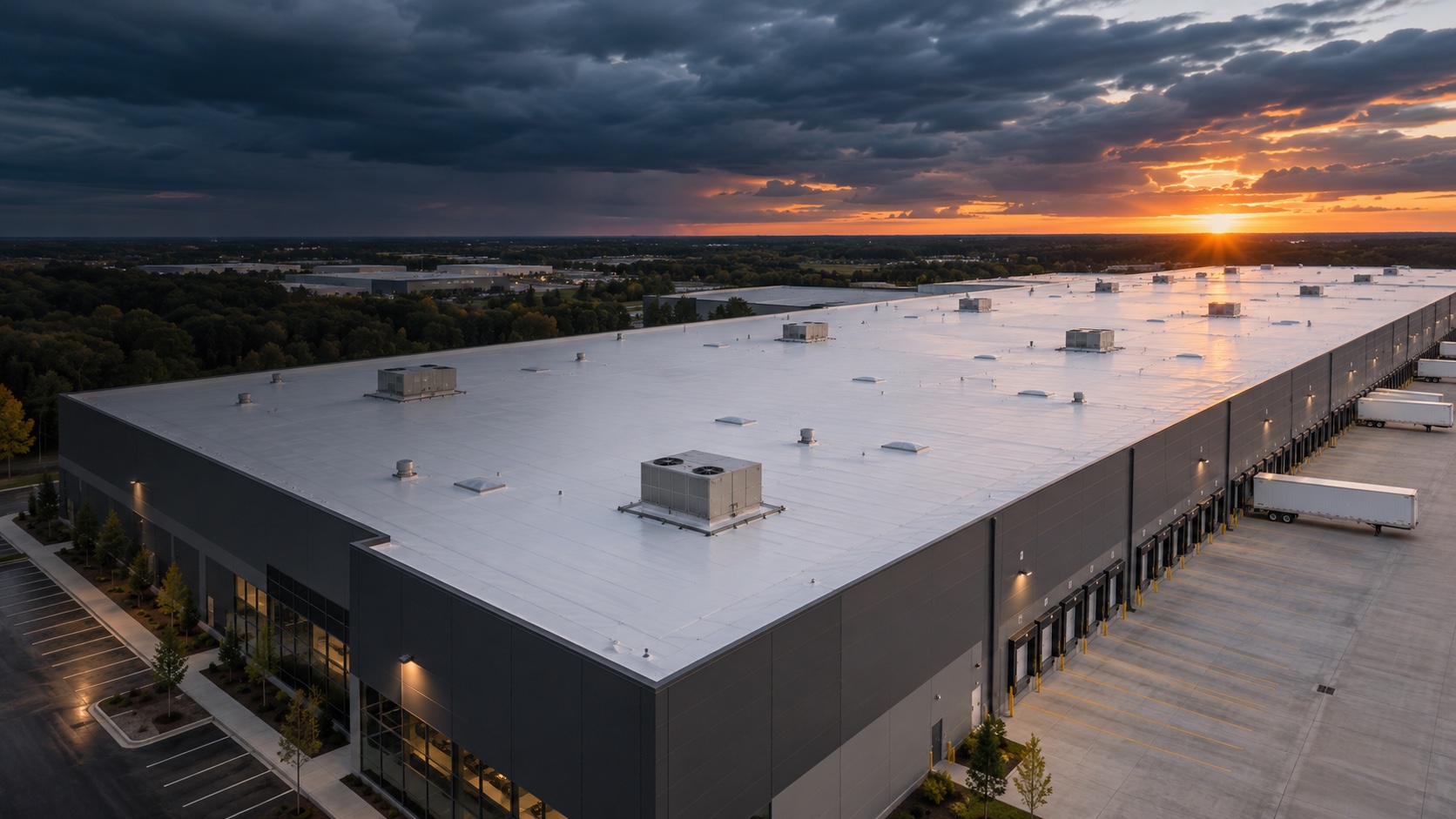
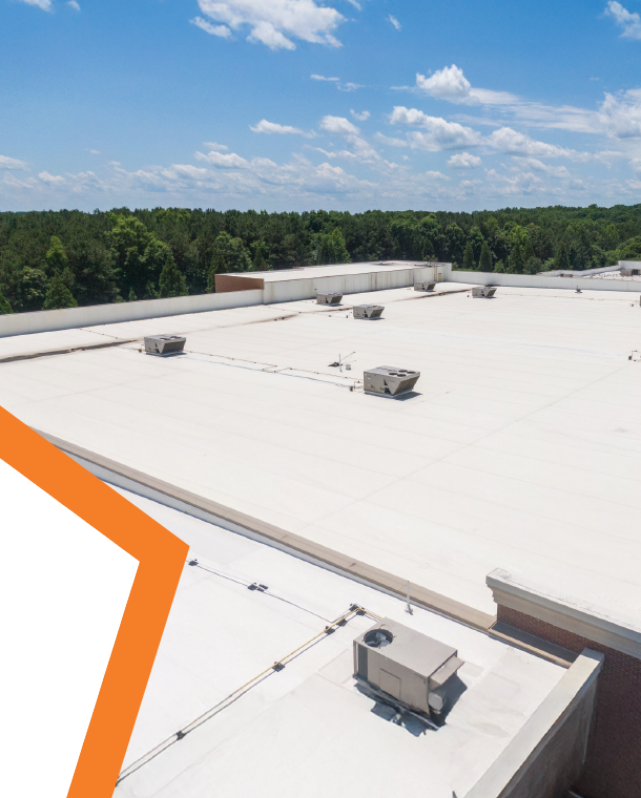
TPO and PVC: two single-ply families
TPO stands for thermoplastic polyolefin. PVC stands for polyvinyl chloride. Both are thermoplastic membrane families used in commercial roofing, with heat-weldable components. They are not interchangeable products, and a white roof should not be identified by color alone.
The assembly can include different membrane thicknesses, insulation, cover boards, attachment methods, and detail components. Ask which specific products are proposed and how the seams, penetrations, perimeter, and transitions will be addressed. If the building has unusual exhaust or chemical exposure, have the design team verify material compatibility for the actual conditions.
Metal: panels, seams, and connections
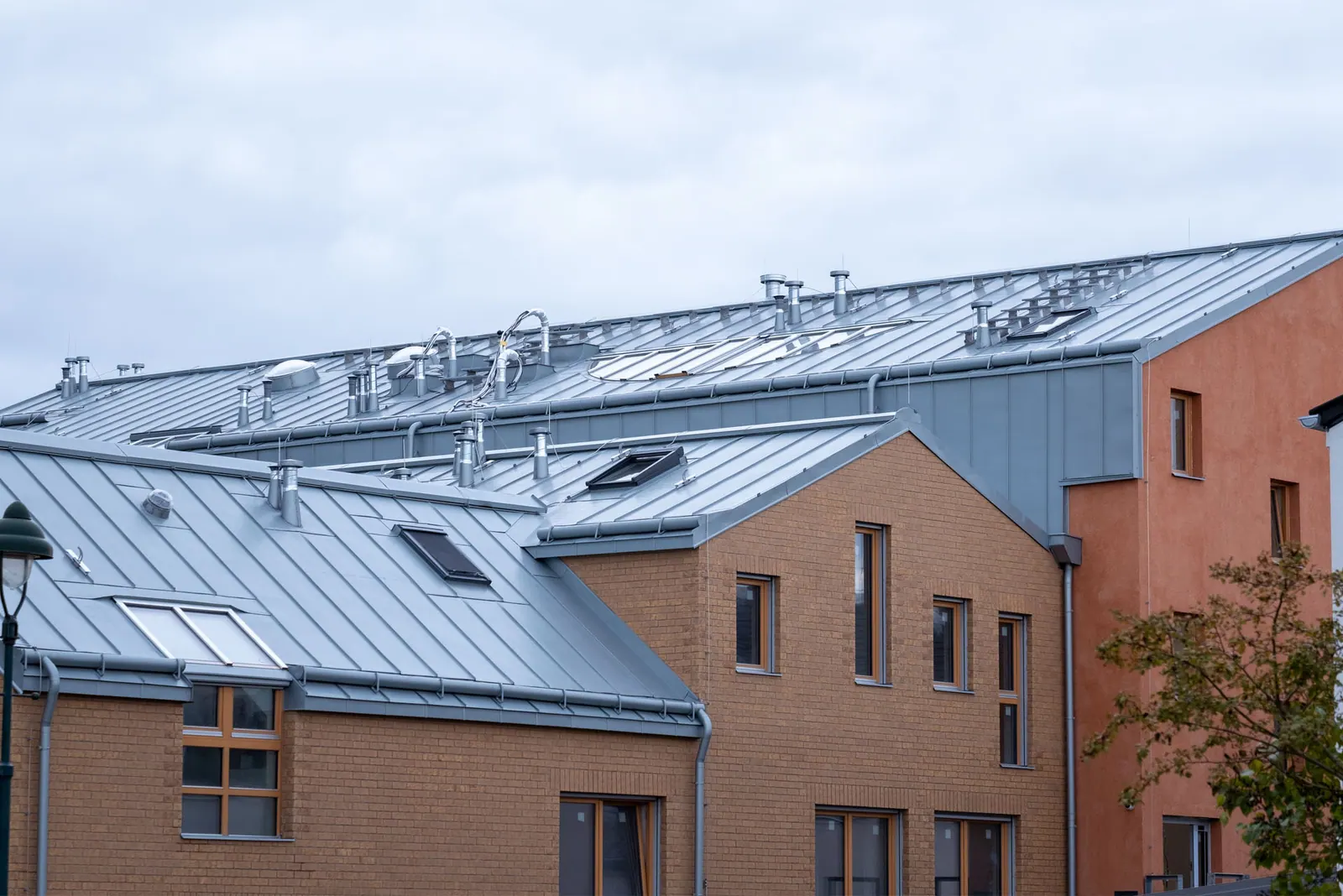
Metal roofs use panel systems whose connections and details deserve close attention. Standing-seam systems may use concealed clips that connect panels to the supporting structure while accommodating movement. Other metal roofs have different fastener arrangements.
After a storm, the professional assessment should identify the actual panel system and document observed conditions at the relevant details. Ask how the proposed work will interface with existing panels, clips or fasteners, penetrations, and edge conditions. A general statement that the roof is “metal” leaves too many questions unanswered.
Modified bitumen and built-up roofing
Modified bitumen and built-up roofing belong to the asphaltic roofing family. Modified bitumen uses manufactured membranes modified with polymers; installation methods vary by product and assembly. Built-up roofing, often abbreviated BUR, uses multiple reinforcing plies with bitumen and a protective surface.
An owner should ask how the existing layers and details were identified, what is known about their condition, and which materials are compatible with the proposed work. The number of visible surface layers does not give a complete account of what is below.
Compare proposals using the same questions
A useful comparison describes the assembly and the work, rather than offering a material name followed by a price. Ask each proposer to explain the basis for its recommendation and identify any conditions that still need investigation.
- What existing components are being retained, repaired, or removed?
- How will moisture concerns, drainage, and rooftop details be evaluated?
- What attachment and perimeter approach is specified for this building?
- Which manufacturer requirements and project-specific approvals apply?
- What maintenance and warranty terms accompany the actual proposed system?
Connect the selection to the property
The roof system should fit the building’s use, operating constraints, condition, and project goals. A qualified professional should evaluate those factors together. The role of an owner’s resource guide is to make that conversation clearer—not to prescribe a roof from a checklist. Start with the facts about the asset, then compare the documented options.